
|
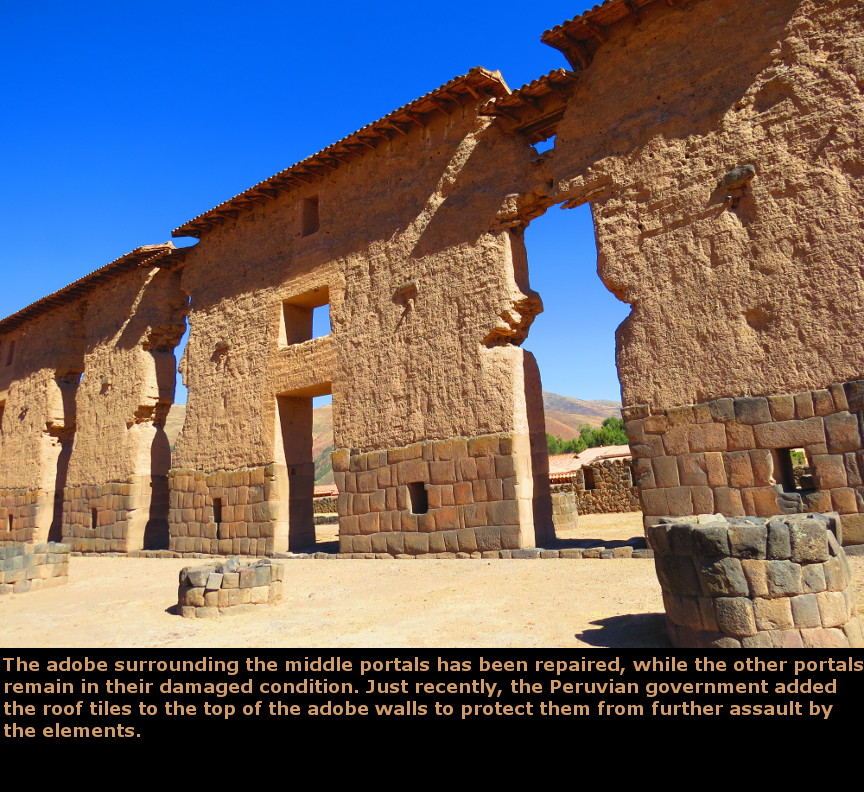
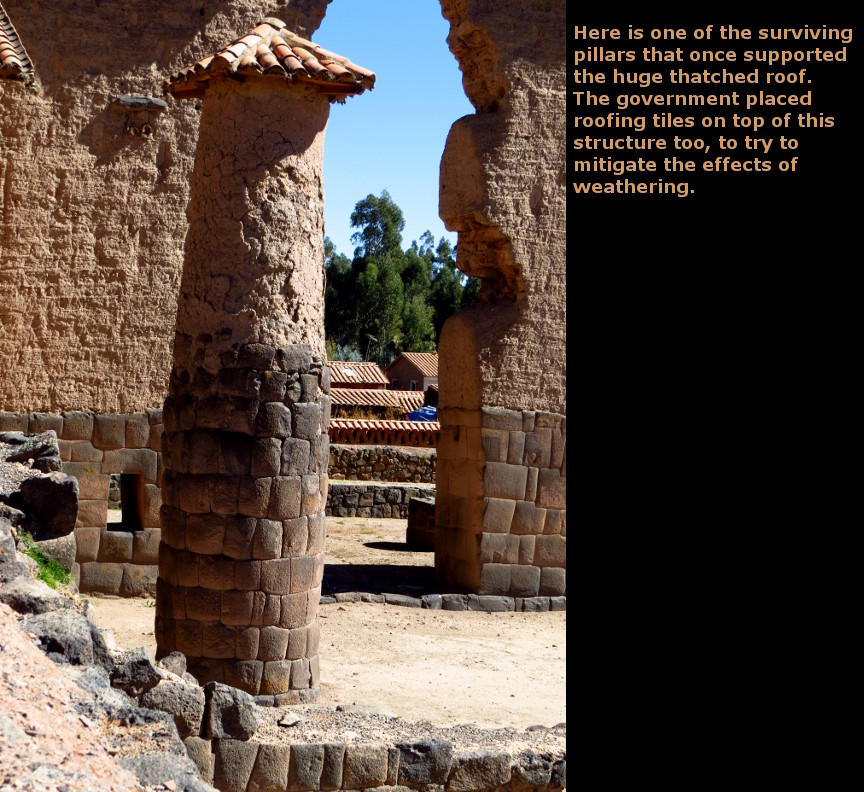
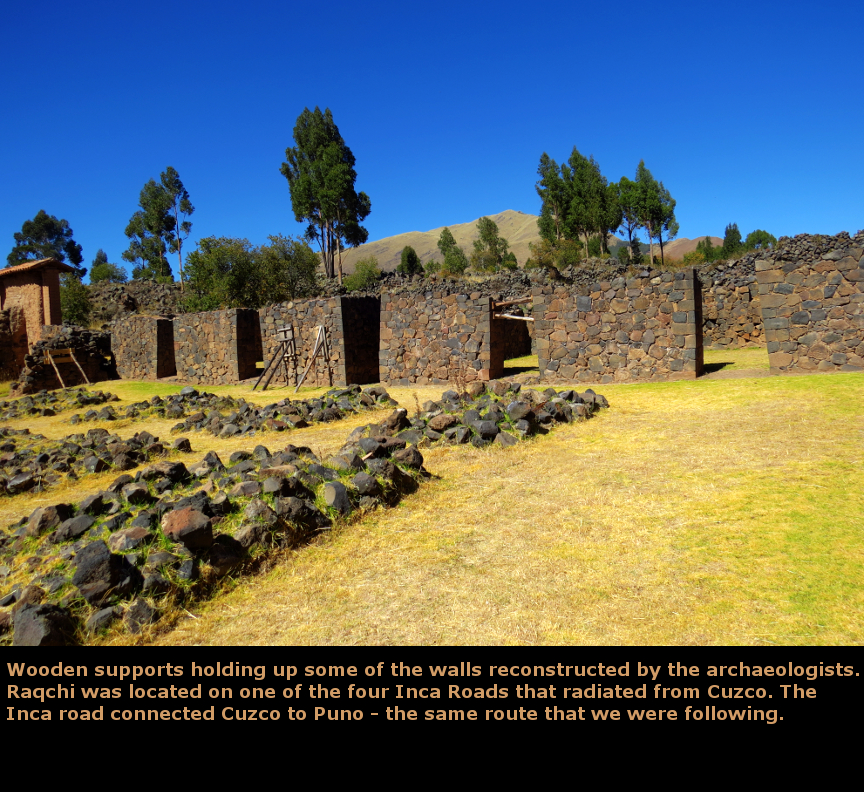
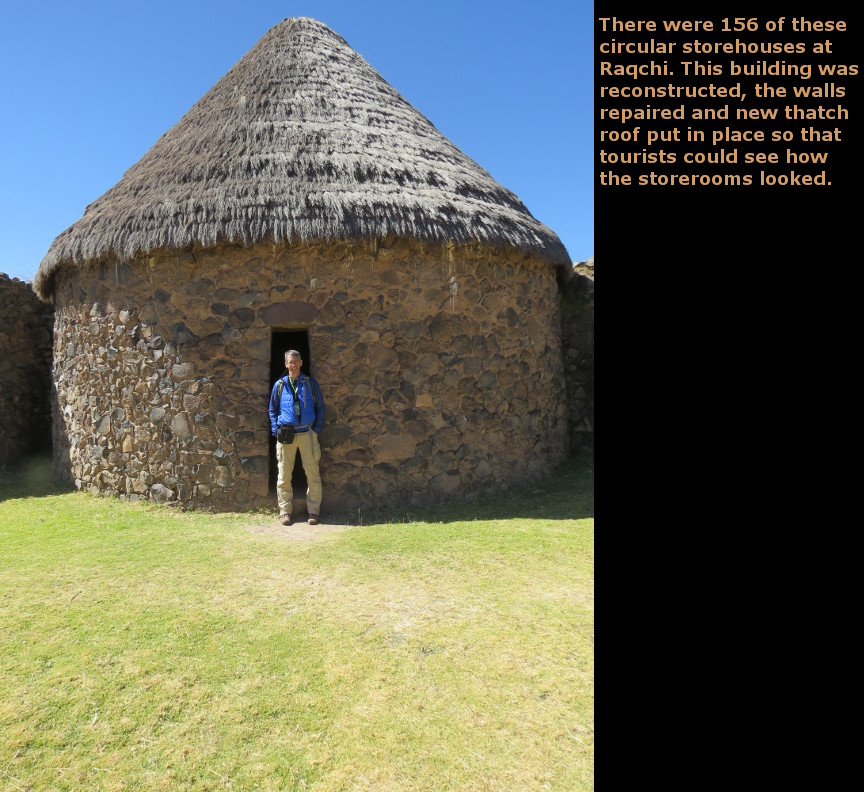
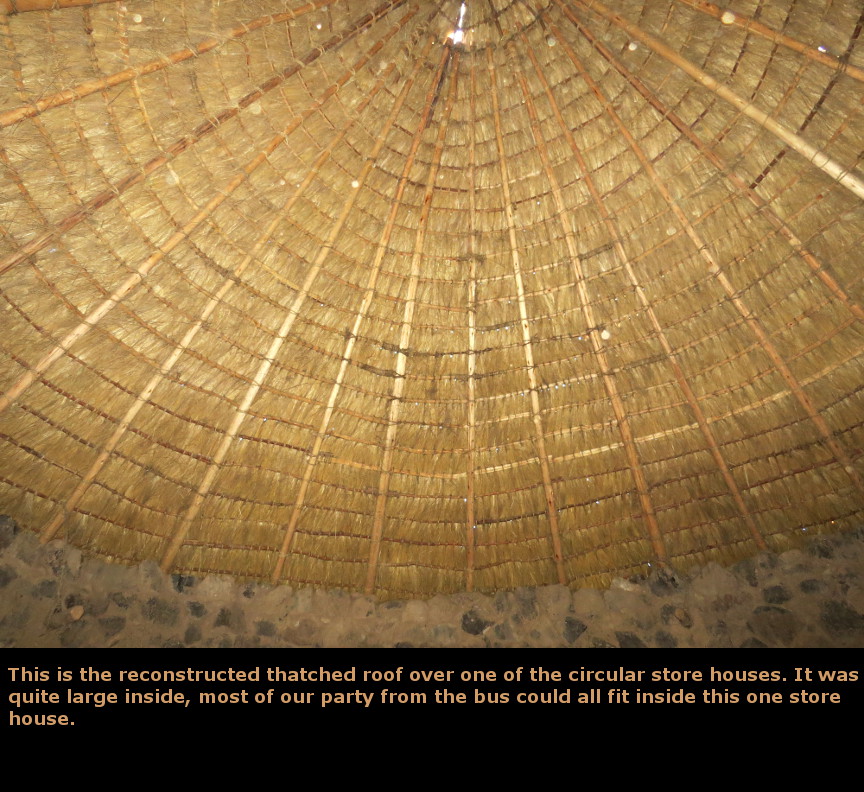
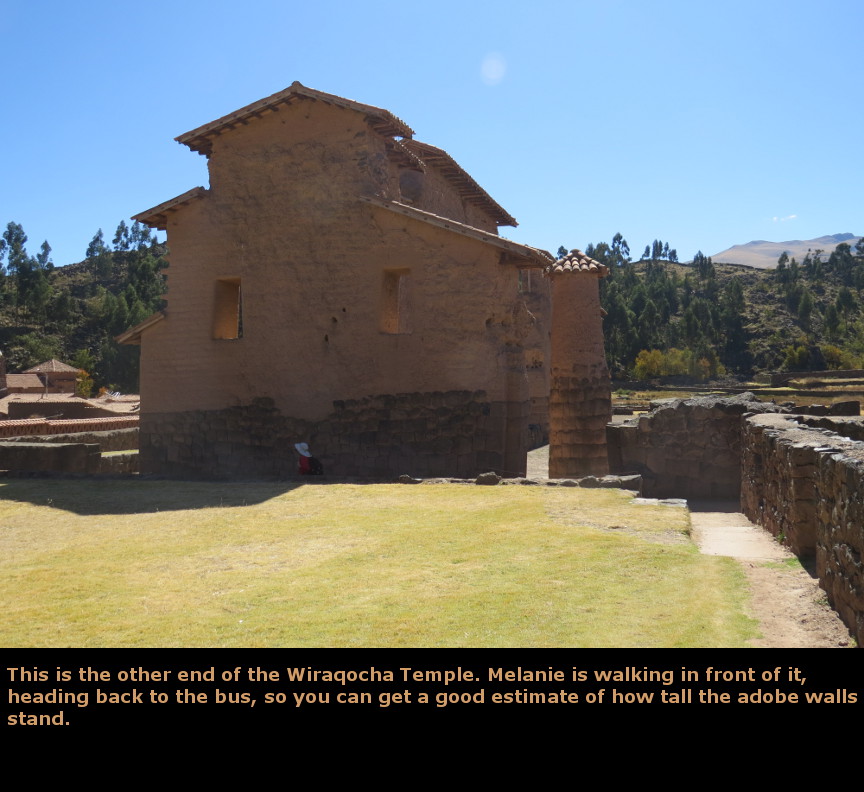
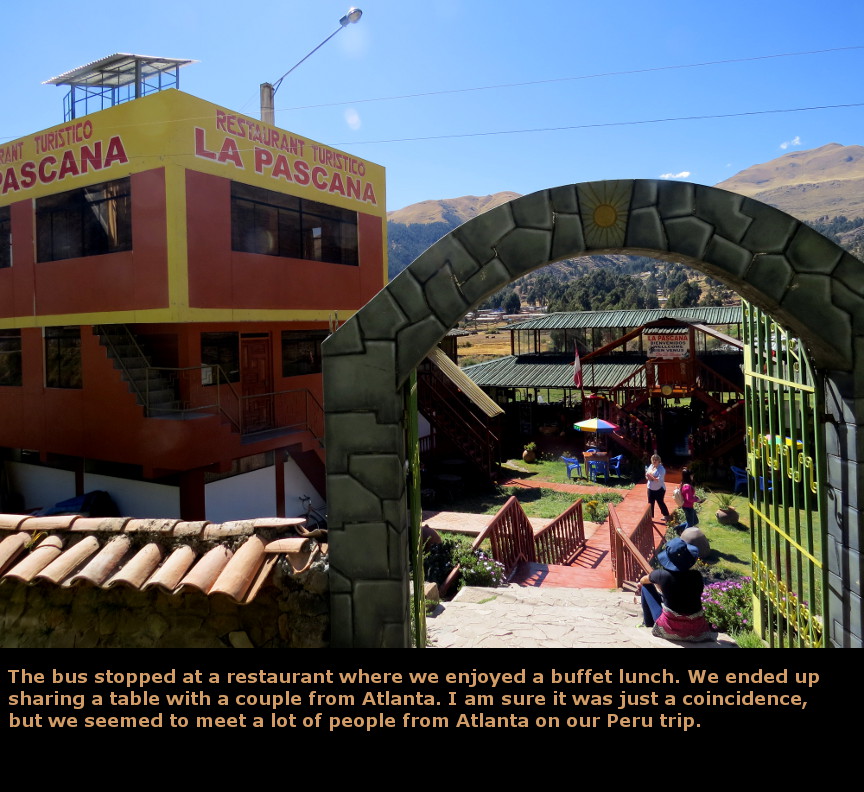
We got up early, ate breakfast and then took a car to the Cuzco Bus Station. Our tours with Alpaca Expeditions were now complete. For the next 3 days we would be guided by Inka Lake Tours. They gave us our tickets for the all day bus ride from Cuzco down to Puno, which sits upon the shore of fabled Lake Titicaca. It is quicker to take the train from Cuzco down to Puno, but riding the bus gave us the opportunity to visit historic sites along the way. Our first stop was at the church of St Peter and Paul in the town of Andahuaylillas. This is an elaborate church, with seemingly every inch of walls covered in murals. It is referred to as the "Sixtine Chapel". We were told that many of the paintings were the work of Native Americans, and so they contained hidden symbols that are significant to the Quechua. Like all the other churches in Peru, no pictures were permitted in the interior. Our next stop was the most interesting site of the day. It was the Inca town of Raqchi. This town, located about 125 km southeast of Cuzco, was constructed to act as a huge warehouse. The Inca used Raqchi to store food and goods in enormous round storehouses called qollcas. Since there was no refrigeration, food was stored by drying it, and then keeping it in cool dry conditions. Raqchi enjoys cool dry climate, and it is located along the main Inca road that leads south from Cuzco to Bolivia and Chile. We were given a guided tour of the Raqchi site. Raqchi is from a Quechua word that means "baked clay". There is a large adobe structure here, called the Wiraqocha Temple. This big structure was once the central wall supporting the roof of a large temple, but now the roof is gone, and the adobe is eroded. It is impressive that such a tall structure made of adobe has remained standing all of these centuries. Next to the temple are the ruins of the warehouses and residences of the Raqchi inhabitants. These are called aposentos. Lastly, we saw the 156 qollcas - which are big circular storerooms. Each of these storerooms was large enough to hold everyone from the bus tour without much crowding. The Incas must have stored an enormous quantity of food and wares at Raqchi. We ate lunch at a restaurant called La Pascana. It was a big buffet, with plenty of Peruvian food. I went back for seconds. We sat at table with Kris and Shweta - who lived in Atlanta. They were doing a trip across South America - Peru, Bolivia, Iguazu Falls, and Rio de Janerio. After lunch, our first bus stop was at the pass of La Raya. We had about 20 minutes to admire the Andes mountains to the west. Our final stop was at Pre-Columbian museum in Pucara. Most of the artifacts in this small museum predated the Inca. We saw some carved statues of goggle-eyed knife wielders who carried human heads - apparently that ancient civilization practiced human sacrifices. No photographs were allowed inside of this museum. It took a while for our bus to pass through the congested city of Juliaca. It looked like miles and miles of poverty, I wonder why so many people live out there, it seemed to be in the middle of no where. As we approached Lake Titicaca, the tour guide told us some interesting details of the lake. It used to be much larger thousands of years ago. But the climate is warming and drying up the water. Since 1950, Peru has lost 520 square kilometers of glacier, and its agriculture is suffering as less and less rain is falling. As we approached Puno, I could see some distant flamingos standing in the shallow waters. Puno was a bigger city than I expected. I was glad that Inka Lake Tours had arranged for a car to drive from the bus station to our hotel - it would have been confusing to try and negotiate the many crowded streets of Puno while carrying our bags. We went out that evening looking for a restaurant to eat dinner, but then we decided that we were still full from that huge buffet lunch. So we ended up buying a carton of Supreme Chocolate Ice Cream and eating that for dinner. Aren't vacations fun? Panorama Photos

MapsThis poster shows the route of our bus - we began early in the morning in Cuzco (lower right corner of the map) and ended in late afternoon in Puno (upper left corner). All of the bus stops are shown here.
To display the photo images on this webpage, I am using a freely distributed java script called Lightbox v2.7.1 written by Lokesh Dhakar. You can download this program by clicking on this link. All the text and photographs on this webpage are my own creation, but the textured background is taken from a site, EOS development, that offers non-profit users free use of their graphics. Click the icon below to visit their site.
|
Click on any thumbnail to begin the slide show at that photograph Day 10 Photos










|