
|
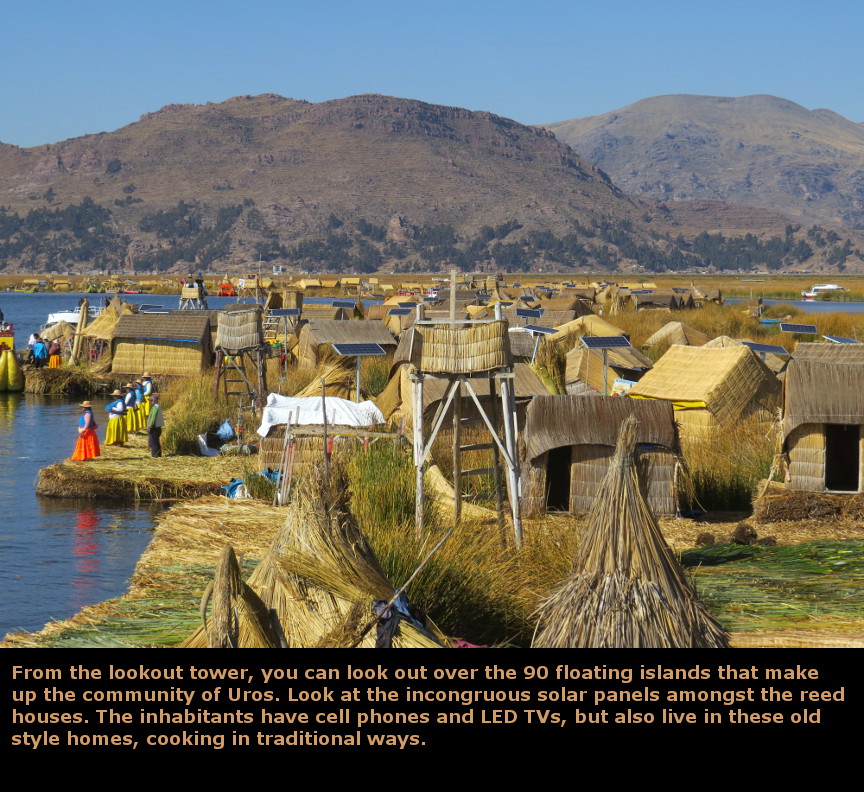
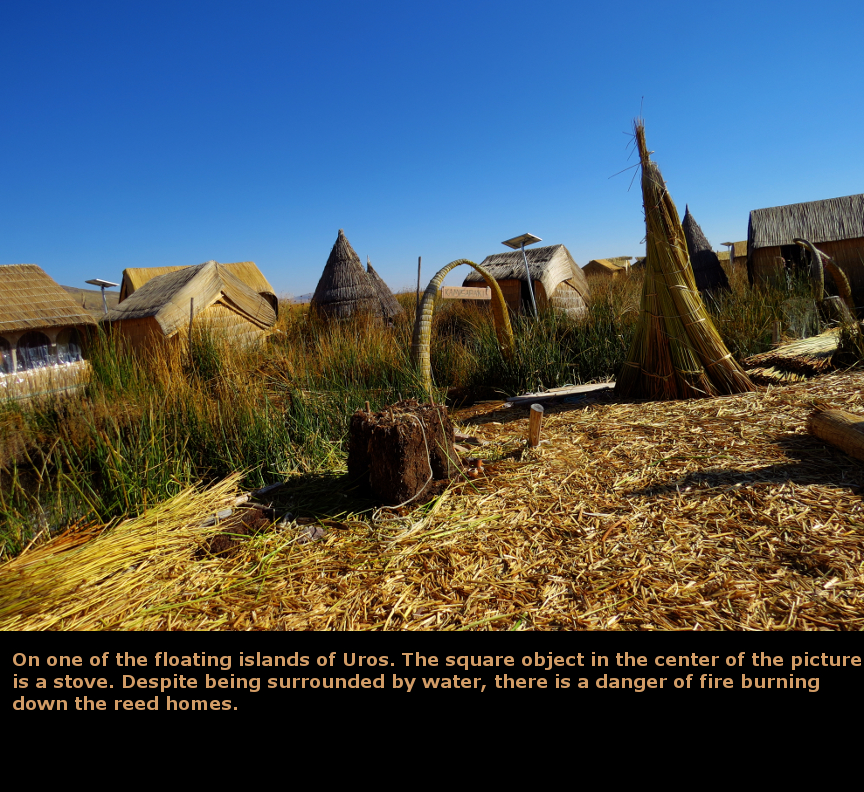
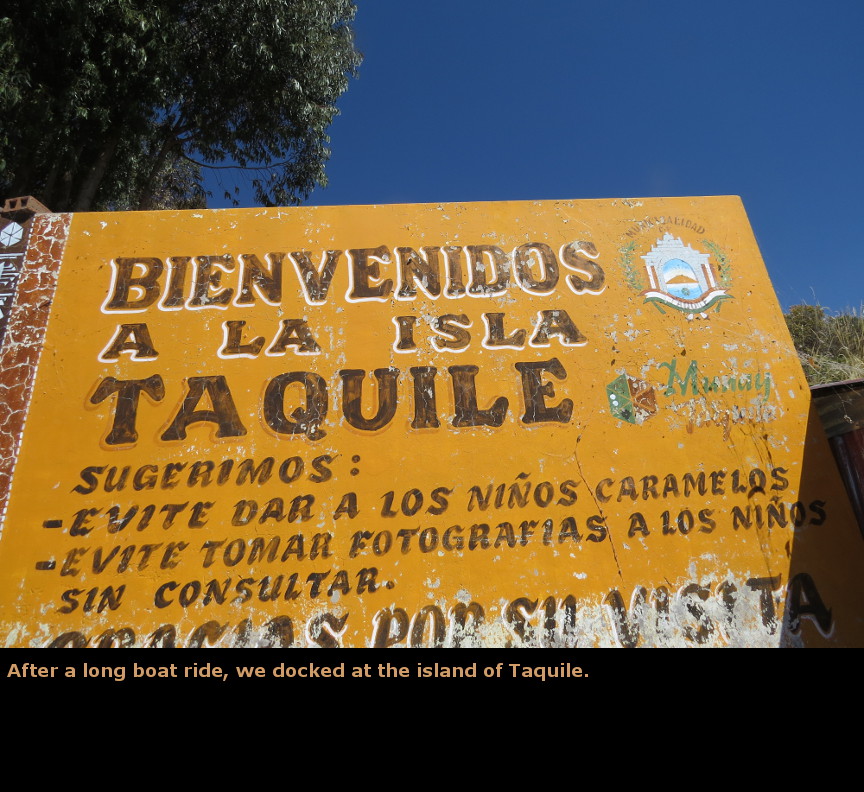
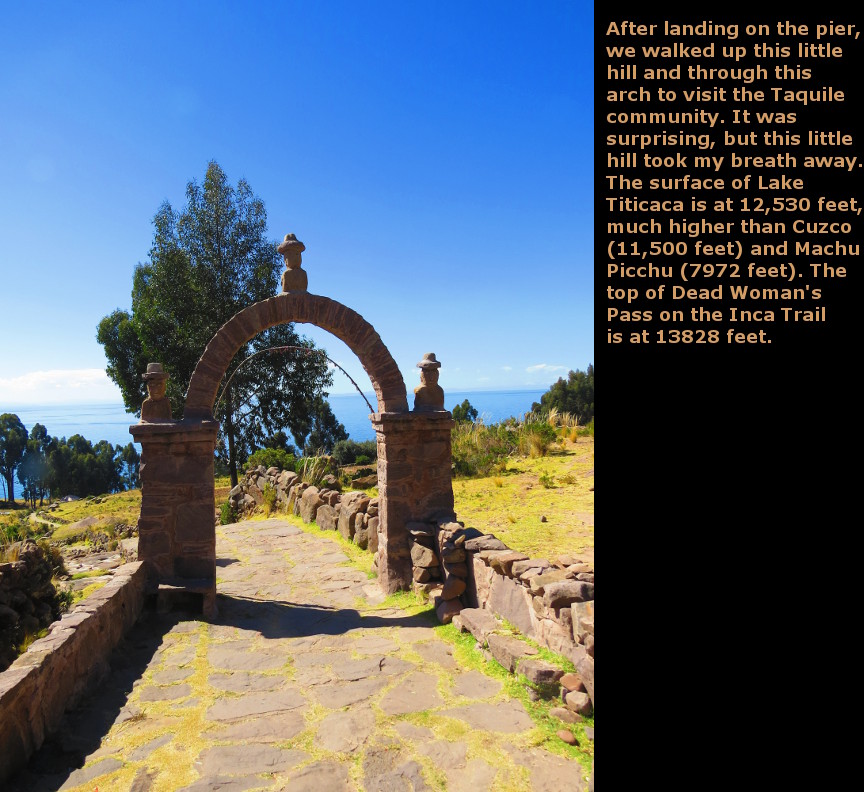
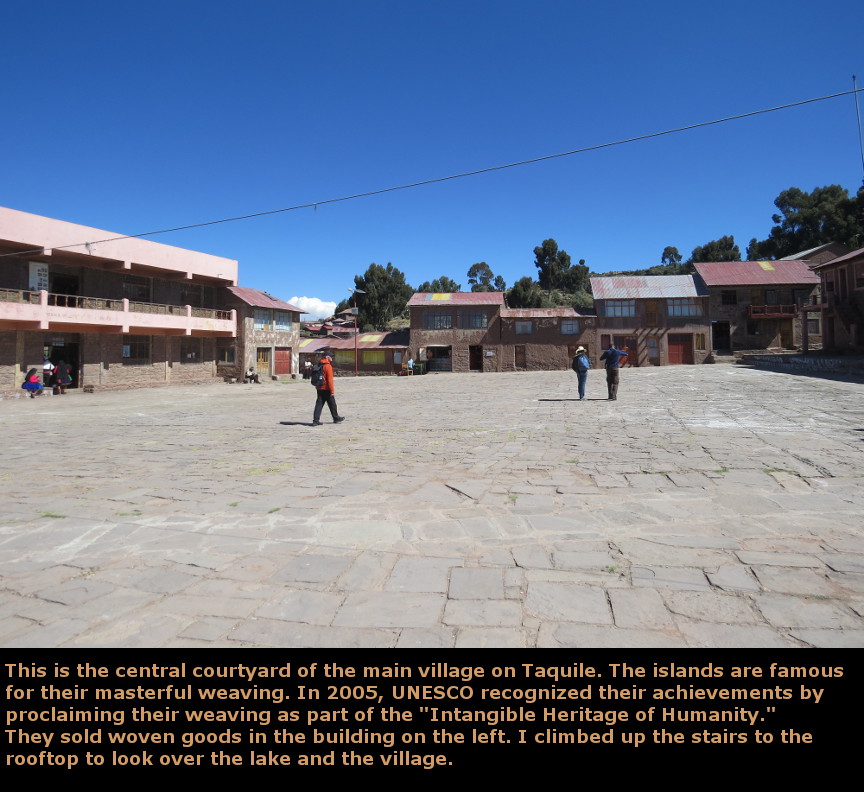
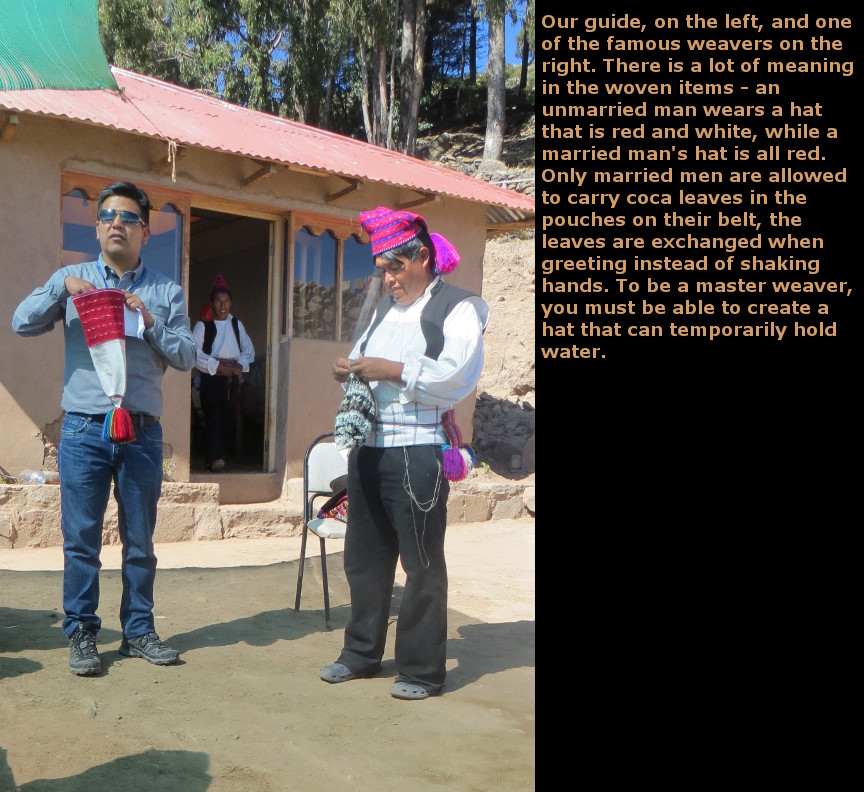
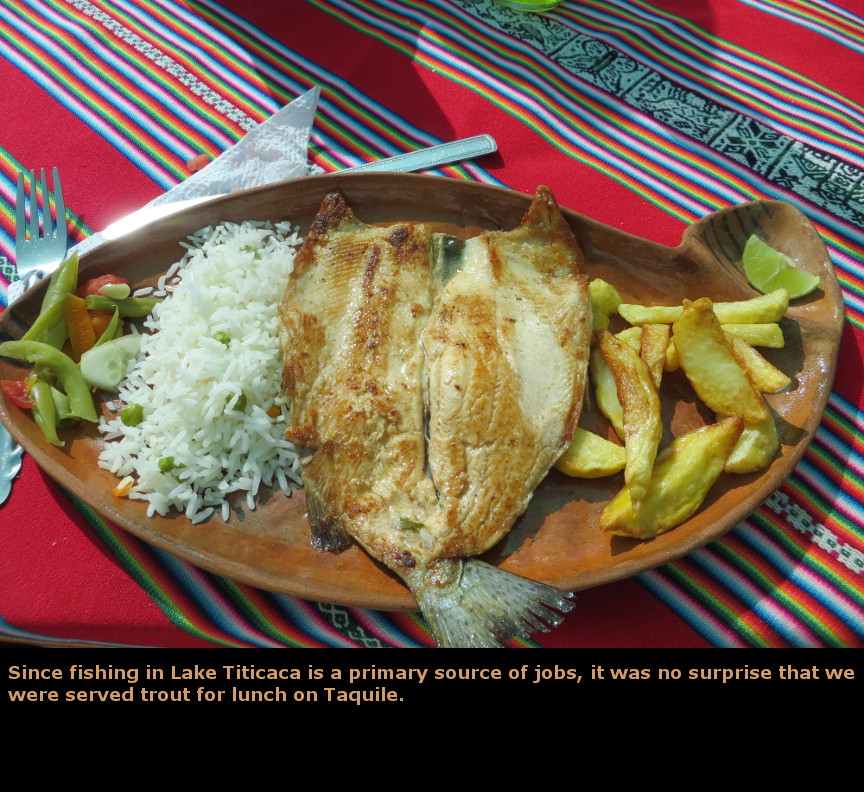
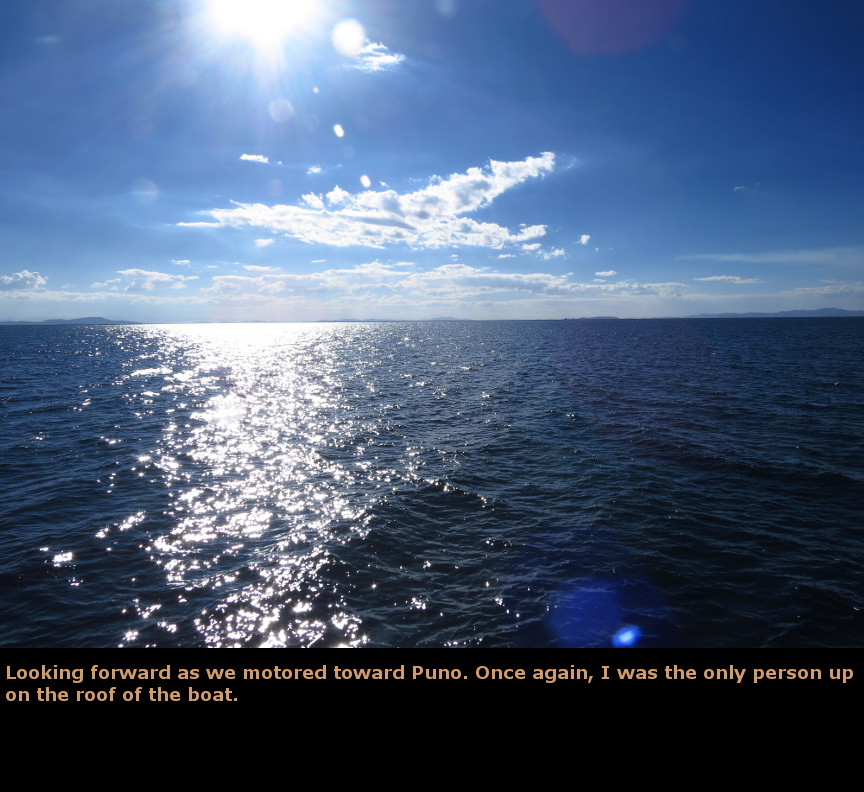
Inka Lake Tours sent a driver to our hotel to pick us up and take us to the dock. We had signed up for an all day boat tour of famous Lake Titicaca. Actually, despite the long duration of this tour, we only traversed a small portion of this immense lake. Our first stop was at the islands of Uros. These floating islands support a population of Rapanui people that refused to be absorbed into the Inca empire, so they took the reeds and have lived there ever since. The islands are woven totora reeds, they are about 2 meters thick, and can survive about 70 years before they rot away. The islands are anchored to the bottom of the lake so that they don't drift. Totora is a giant bulrush sedge plant. The primary industry is fishing. Tourism a big source of income, but the tourists typically only visit during the Peruvian dry season (winter) - April through September. I thought the funniest part of our island visit was when our guide told us that if the residents of an island get angry with each other, they cut the reed island in half and each side goes their separate ways. They brought out a giant metal saw to prove that this was a true story. As we rode in the boat, the guides gave us information about Lake Titicaca. The best story told how archaeologists searched this lake for the lost treasures of the Inca. When Pizarro was looting the empire, legend says that an order went out to hide the gold and silver artifacts from the invaders. One version of this legend says that the Inca hid their treasures at the bottom of a lake. This story attracted world-famous underwater explorer Jacques Cousteau to Lake Titicaca. Despite diving and searching inside a small submersible, Jacques Cousteau found no treasure, but apparently discovered some frogs that grow as large as 1 kg, the largest frogs in the world. Despite the fact that there is no river draining Lake Titicaca, it does not have a high salinity content. Water is only lost from the lake through evaporation. The deepest part of the lake is 700 feet, and the surface covers an area of 8500 square kilometers. On the island of Taquile, we took a short walk up to a village that is famous for its weavers. We didn't see any demo of the weavers in action, we were just given about an hour in the village square that had shops lined with woven goods for sale. Then we walked to a restaurant that gave us a big fish dinner. It was a large lunch, so when we got back to Puno that evening, we didn't feel like eating a big dinner. So we did the trick of buying a carton of chocolate ice cream and having that for dinner! Panorama Photos


MapsHere's a map showing the entire Lake Titicaca. Puno is up in the left corner, with Taquile Island just a little bit to the right. It took us a while to reach that island by boat, but it hardly looks like any distance at all compared to the immensity of the lake.
VideosIf you do not see the videos, but instead see a message that says: "Error: Video playback aborted" it is possible that the content is being blocked by your web browser. You may see a message at the top or bottom of your page that says "restricted webpage from running scripts or ActiveX controls". If you see that message, click on the ALLOW BLOCKED CONTENT box and that should allow these videos to run.
To display the photo images on this webpage, I am using a freely distributed java script called Lightbox v2.7.1 written by Lokesh Dhakar. You can download this program by clicking on this link. All the text and photographs on this webpage are my own creation, but the textured background is taken from a site, EOS development, that offers non-profit users free use of their graphics. Click the icon below to visit their site.
|
Click on any thumbnail to begin the slide show at that photograph Day 11 Photos













|